



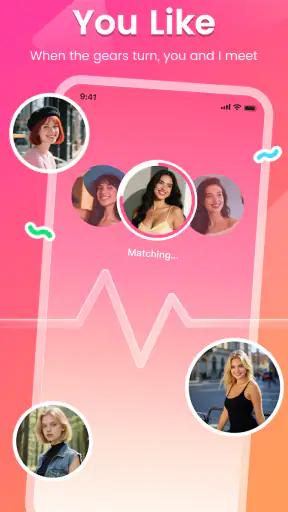
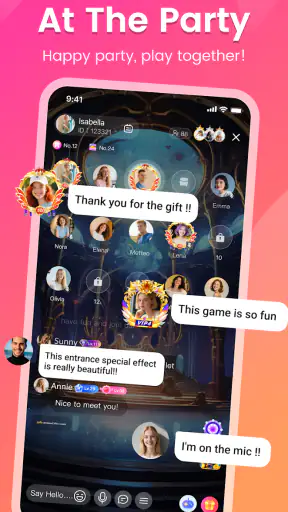


Waha - Video Chat & Party is the kind of entertainment app I would approach with a simple question: am I looking for a quick way to meet people, or do I want a more structured social experience? Its focus is casual connection, video conversation, and party-style interaction rather than private messaging alone. After spending time with it, I found that its appeal depends less on a long feature checklist and more on whether you enjoy spontaneous conversations with people you do not already know.
The app is free to install, which makes trying it fairly easy. It comes from INCHI Technology Limited and sits in the entertainment category, with a mature audience rating of 17 and over. That age guidance matters: this is not an app I would hand to a younger teenager or recommend treating like a standard family chat tool. The current version is 10.1.00, and it runs on Android 7.0 or later. Those details make it accessible to many older Android phones, although your actual experience will still depend on camera quality, microphone performance, connection stability, and how comfortable you are using a social app built around live interaction.
How I would decide whether Waha fits
My first decision criterion is the kind of social energy you want. Waha is better suited to someone who likes discovering new conversations than to someone who wants a carefully managed list of existing contacts. If your ideal evening involves opening an app, seeing who is available, and joining a livelier conversation, the concept makes sense. If you prefer writing thoughtful messages before speaking, or you dislike being seen on camera, the format may feel demanding rather than entertaining.
The second criterion is your tolerance for unpredictability. Video-based social apps can be fun precisely because every interaction feels different, but that also means the quality of a session can vary. One conversation may be easy and friendly, while the next may be awkward, too noisy, or simply not interesting. I would not judge the app by a single short session. It works best when you treat it as a place to browse for social moments, not as a guaranteed way to find a meaningful connection every time you open it.
Privacy and personal boundaries should be part of the decision before you create an account or start talking. I recommend using a profile name that does not reveal unnecessary personal details, avoiding your home address or workplace in conversation, and ending a chat as soon as it becomes uncomfortable. These habits are especially important in any service that brings strangers together through live communication. The mature rating is a useful reminder that the social environment is intended for adults, but an age label alone cannot replace your own judgment.
There is also a practical question: will you use it often enough to justify learning its rhythm? A new social app has a small switching cost. You need to understand its navigation, work out which conversations suit you, decide how much of your profile to share, and become familiar with any paid prompts. If you only want an occasional conversation, that learning curve may be more effort than using a familiar messenger. If you enjoy testing new social spaces, the same process can be part of the appeal.
The experience is strongest when you use it intentionally
My most useful approach was to decide what I wanted before opening the app. On a quiet evening, I might look for light conversation and stay open to meeting someone with different interests. At another time, I might only want to observe the atmosphere briefly before joining in. That small distinction helps prevent the common disappointment of expecting every session to become a close friendship.
A realistic everyday scenario would be a person who has finished work, does not want to plan a full night out, and still wants some human interaction. Instead of scrolling through short videos alone, that person can use Waha as a more active form of entertainment. The benefit is the possibility of a genuine exchange; the trade-off is that the experience asks for attention, a working microphone and camera, and a willingness to leave conversations that are not a good match.
I also found that the app makes more sense when you keep your first interactions lightweight. Do not begin by sharing your full personal story or moving immediately to another service. Start with ordinary topics, notice how the other person responds to boundaries, and only continue if the conversation feels balanced. This is not just safety advice; it improves the quality of the experience because you can quickly filter out conversations that feel intrusive, rushed, or one-sided.
What makes Waha stand out among social entertainment apps
The clearest strength is immediacy. Traditional social networks often ask you to build a profile, follow people, wait for replies, and consume updates before a conversation begins. Waha is aimed more directly at the meeting itself. That gives it a different emotional pace: less like maintaining a public feed and more like entering a room where a conversation may already be happening.
Compared with ordinary text messengers, the video-first direction can make interactions feel more personal. Facial expressions, tone, and pauses carry information that text does not. For users who find endless typing tiring, that can be a real advantage. I would especially recommend trying it if you are comfortable speaking spontaneously and want something more engaging than sending short messages back and forth.
Its party-oriented identity is another point of distinction. The app is not presented as a formal dating service, a professional networking platform, or a productivity tool. That narrower purpose can be refreshing because you are not expected to turn every interaction into a carefully curated identity. The trade-off is that people arrive with different expectations, so you need to communicate clearly and avoid assuming that a friendly conversation means the same thing to everyone.
One non-obvious advantage is that the format can help you test your own social preferences quickly. After a few sessions, you may learn whether you prefer one-to-one conversation, lively group energy, short encounters, or longer discussions. That self-knowledge is useful when choosing other social platforms too. Rather than downloading several apps blindly, you can identify the type of interaction that actually keeps you engaged.
Another practical strength is its relatively broad device reach. Because the minimum Android requirement is 7.0, people using older compatible phones may still be able to try it instead of needing a recent handset. That does not guarantee smooth video on every device, but it lowers one barrier to entry. I would still use a stable connection and headphones when possible, since background noise can quickly make a live conversation unpleasant for both sides.
The app has attracted a substantial audience, with over five million installs and a 4.2 average from roughly fifty-eight thousand ratings. I see those figures as evidence that the concept has found a real audience, not as a promise that every interaction will be good. A large pool can improve the chance of finding someone interesting, but it can also mean more variation in behavior and conversation quality. The important question is whether you enjoy searching through that variety.
Where another type of app may be a better fit
I would choose a conventional messenger instead if my priority were reliable communication with friends, family, or colleagues. A messenger is usually better when I already know who I want to contact and need predictable replies, shared plans, or an ongoing conversation history. Waha makes more sense when discovery is part of the entertainment. It is not the first tool I would reach for when the goal is simply to coordinate dinner with people I know.
A moderated community platform may suit you better if you need topic-based discussion. For example, someone who wants to talk about a specific hobby, learn from experienced members, or search old discussions may prefer a forum or interest community. Waha’s appeal is the live social encounter, not a searchable knowledge archive. Choosing it for detailed advice or long-term group organization would be a mismatch.
People who strongly prefer privacy should think carefully before using any video-centered social service. Even without sharing sensitive information, appearing on camera can reveal more than text does, including your surroundings, routines, and mood. If you want maximum control over what others learn about you, a text-only platform may be the better alternative. That is not a flaw unique to Waha; it is a fundamental trade-off of live video interaction.
There is also a difference between casual socializing and relationship-focused services. If you want profiles designed around specific compatibility questions, clear relationship intentions, or a slower matching process, a dedicated dating app may offer a more suitable structure. Waha can introduce you to interesting people, but I would not assume that every person there is looking for the same kind of connection. Setting expectations early prevents a lot of frustration.
Finally, users who dislike spontaneous speaking should not feel pressured to adapt. Some people are much more comfortable with asynchronous voice notes, text, or carefully prepared posts. Those formats give you time to think and edit. Waha’s immediacy is its selling point, but it is also the reason it may feel tiring or uncomfortable if you need more control over every response.
Understanding the free model before you commit
The free entry point is helpful because you can explore the basic experience before deciding whether it deserves regular use. I would begin without spending anything, learn how conversations work, and pay attention to which actions are genuinely useful rather than reacting to every purchase prompt. The listed in-app purchases range from forty-nine cents to one hundred twenty-four dollars and ninety-nine cents per item, so the possible spending range is wide enough to justify caution.
My advice is to treat virtual spending as an entertainment budget, not as a shortcut to better social results. Paying for an optional item cannot guarantee a more interesting conversation, a respectful person, or a lasting friendship. If you do decide to buy something, set a limit before opening the purchase screen and check the amount carefully. This is especially important in an app where the excitement of a live interaction can make an impulse decision feel more reasonable than it is.
The real cost of switching from another social app is not only money. It is attention. You may spend time learning the community, adjusting your profile, and deciding how to handle unwanted interactions. I would keep the first session short, review the app’s controls as you encounter them, and avoid building your entire social routine around it immediately. That gives you a clearer sense of whether you like Waha itself or simply enjoy the novelty of a new platform.
A useful workflow is to separate discovery from commitment. First, browse and observe the general atmosphere. Next, have a few brief conversations without sharing personal contact details. Then decide whether the people and pace match what you wanted. This three-step approach is more reliable than judging the service from its name or from one unusually good conversation. It also reduces the chance of spending money before you understand how you actually use the app.
For parents, the mature rating should be treated as a firm boundary rather than a suggestion. For adults, it is still worth discussing expectations with anyone in your household who may appear in the background of a video call. A private room, headphones, and a neutral background can make the experience more comfortable and reduce accidental exposure of personal information.
My recommendation after weighing the trade-offs
I would recommend Waha - Video Chat & Party to adults who want spontaneous video-based entertainment and are comfortable meeting unfamiliar people. It is particularly appealing if ordinary scrolling feels passive and text messaging feels too limited. The combination of live conversation and party-style social discovery gives it a clear identity, and the large installed audience suggests that it is not an empty experiment.
I would skip it if I wanted a private, predictable way to stay in touch with existing contacts, or if I felt uneasy about appearing on camera. I would also choose a more specialized service for professional networking, focused hobby discussion, structured dating, or family communication. Waha can be enjoyable without being the best tool for every social goal.
My strongest recommendation is to start slowly. Use a simple profile, keep early conversations general, leave quickly when someone ignores your boundaries, and delay purchases until you understand the experience. Those choices make the app more enjoyable and help you judge it on its actual strengths instead of on pressure, novelty, or unrealistic expectations.
Overall, I see Waha as a focused entertainment option rather than a universal replacement for social apps. It succeeds when I want a live, unpredictable interaction and accept that some sessions will be better than others. It is free to try, available on older Android versions, and aimed clearly at a mature audience. If that combination matches the way you like to socialize, it is worth exploring; if you prefer control, privacy, or purpose-built communities, another category will probably serve you better.
My final verdict: try it for the conversations, not for guaranteed results. The best reason to keep Waha installed is the chance to meet someone interesting in a more immediate way than a standard feed or messenger allows. Just keep your expectations realistic, protect your personal boundaries, and remember that the app is entertainment first.
With around nine hundred seventy written reviews alongside its broader rating activity, the service has generated enough user discussion to show that people are actively forming opinions about it. I would still trust your own first few sessions more than any single score. Social apps are highly personal: the same spontaneous format that feels refreshing to me may feel chaotic to you. That is why a careful trial, rather than an automatic long-term commitment, is the fairest way to decide.


